Banner artwork by JoeyCheung / Shutterstock.com
For Paul Chow, the modern general counsel role is not about knowing every rule by heart. It is about judgment.
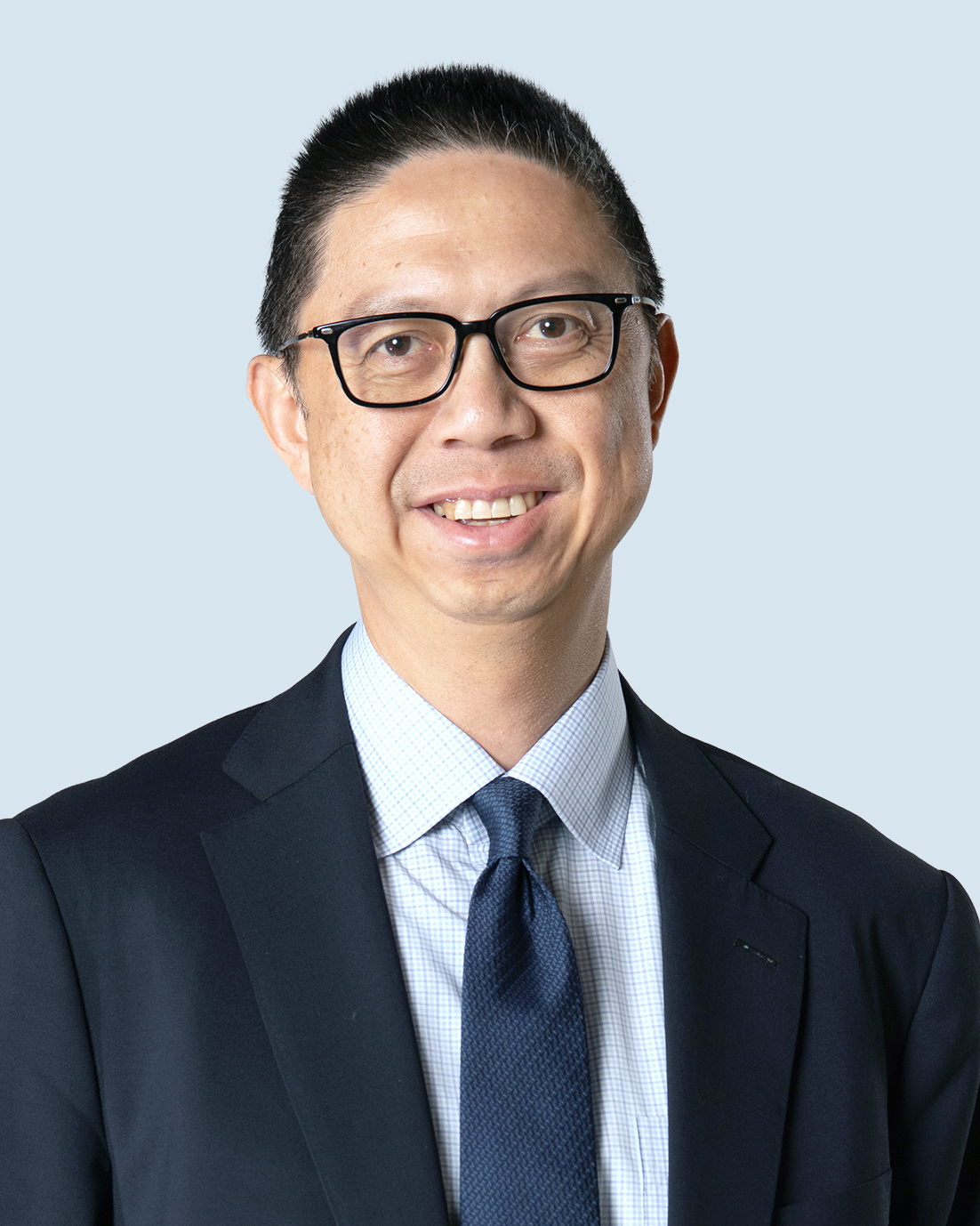
Group General Counsel and Group Chief Sustainability Officer
Hong Kong Exchanges and Clearing Limited (HKEX)
As Group General Counsel and Group Chief Sustainability Officer of Hong Kong Exchanges and Clearing Limited (HKEX), Chow helps lead inside one of the world’s most complex market institutions: a listed company, a market operator, and — through its listing division — the regulator of roughly 2,700 listed companies in Hong Kong. That structure gives him a front-row view of how law, governance, market confidence, and business strategy intersect.
His role, as he described it, is less about being the technical expert on every issue and more about helping the legal team understand what matters most to management and the board. “I see myself as more of a conduit,” Chow said — someone who translates strategy, risk appetite, and business priorities into legal direction.
That is the larger lesson for CLOs and aspiring general counsel: Influence comes from moving beyond the legal lane.
Chow’s own career reflects that mindset. Before moving in-house, he spent more than two decades in private practice, including more than 15 years as a partner. His core practice was M&A and capital markets, but he also built experience in financial regulation, regulator engagement, and business development. He said the move in-house was “opportunistic,” but not accidental: “You want to put yourself in the best position when the opportunity arises.”
At HKEX, that breadth matters every day. Chow works across legal, sustainability, risk management, governance, market development, and strategic initiatives. The most fulfilling part of the job, he said, is “joining the dots” — seeing where different teams, stakeholders, and opportunities connect across a multifaceted organization.
His advice to the next generation of in-house leaders is direct: Step out of your comfort zone. Lawyers often undersell themselves, he said, even though they can add value on strategy, reputation, communications, risk, and business execution. “Nobody is interested in the law,” Chow said. What colleagues want to discuss is the project, the decision, the risk, and the path forward.
In the following Q&A, Chow discusses his transition from private practice to the GC seat, the governance role of listing rules, why sustainability can be a natural fit for legal leadership, and how aspiring general counsel can build influence by contributing beyond pure legal advice.
Q&A with HKEX’s Paul Chow
ACC: As you look back on your career, what were the key inflection points that shaped your path to becoming a group general counsel?
Paul Chow: It was opportunistic in many ways. People sometimes ask me, “How do I become an in-house lawyer or a general counsel?” My answer is that you want to put yourself in the best position when the opportunity arises.
Of course, people do that in different ways — through networking, building their profile, and getting involved in different areas. Those things are all helpful. For me, the key inflection point came when I received a call from Cathay Pacific, or actually from Swire, which is a major shareholder of Cathay and part of the same group. Someone who knew me reached out and asked whether I would be interested in taking on the role.
At that point, I had already been thinking about transitioning into an in-house role. I had been in private practice for more than 20 years, including more than 15 years as a partner. I was looking for something different and more stimulating.
By then, I had also been involved in a lot of different things, so looking back, I was quite well placed to become a general counsel.
ACC: Was there a direct connection between your private practice and the in-house roles you took on?
Chow: My major practice was M&A and capital markets, but I was fortunate to do a number of different things along the way.
I am a curious person by nature. In private practice, I was often the person who would put up my hand and say, “I’m happy to do this” or “I’m happy to do that” if I thought I could add value or help the client.
So while my core practice was M&A and capital markets, I also did financial regulatory work. I did some contentious work — not a lot — but I dealt with regulators quite a bit. That experience set me up well.
I was also interested in business development and business ideas. Through my M&A and capital markets work, I had many conversations with companies about strategy and broader business implications.
It is a mindset issue. Some lawyers go into a matter and ask only, “What is the legal issue here?” They keep themselves in the legal advice lane. I would sometimes go into other areas and talk to the company about strategic or other implications. That made the work more interesting, and it helped me add value in a different way.
As a general counsel, you need to realize that you cannot know everything. What people want is your judgment.
Paul Chow
ACC: HKEX is a complex institution. How did you approach the learning curve when you moved into the role?
Chow: First, it helps to understand HKEX’s structure. HKEX has several different roles. It is a listed company itself. It operates different markets. And it is also a regulator, in the sense that we regulate roughly 2,700 listed companies in Hong Kong through our listing division.
There is a Chinese wall between the listing division and the rest of the firm. The listing division is a regulator, so it needs to be independent and have its own regulatory agenda, not affected by commercial interests. My role primarily focuses on the other side of the wall — the commercial side of the business. I do not get involved in listing division cases.
So HKEX has three roles: It is a listed company, it operates markets, and it is a regulator. That makes it a fascinating organization.
My involvement with HKEX actually started more than 20 years ago. As a capital markets and M&A lawyer in private practice, I dealt with many listed companies and worked with the listing division as outside counsel for my clients. In that sense, I knew the exchange quite well.
The side I did not know as well was the commercial side: trading, settlement, clearing, and risk management. So yes, there was a learning curve.
I was fortunate to have a very mature legal team. Many members of the team have been here for more than 10 years, and some for more than 20 years. They have deep institutional knowledge, which is incredibly valuable.
As general counsel, I do not need to know every technical rule in detail. My role is to provide strategic direction. I understand what management and the board are looking at, the organization’s risk appetite, and the strategic rationale behind the things we are trying to do.
I see myself as more of a conduit — guiding the team on what is important, what is less critical, and where they should focus. I have a sense of the trading rules, but I am not as familiar with every detail as some of my teammates. That is a good division of labor.
As a general counsel, you need to realize that you cannot know everything. People do not expect you to know exactly what a particular trading rule says. What they want is your judgment: If something happens, what are the repercussions? Is it material? How should we think about the risk?
ACC: HKEX’s listing rules help shape company behavior and market confidence. How should CLOs think about listing rules and exchange regulation?
Chow: I see listing rules as a governance framework.
They establish baseline expectations around disclosure, independence, risk management, shareholder protection, internal controls, fiduciary duties, and accountability. They help shape how boards prioritize governance and decision-making. In that sense, they drive board discipline and management discipline.
For my peers who are CLOs or GCs of listed companies, I think the most constructive way to view the relationship with the exchange is as a partnership.
Your stock is listed on our platform. We want you to perform well, and you want your stock to perform well. We listen to regulators, investors, and the market, and we help communicate what the market is looking for.
ESG disclosure is a good example. In Hong Kong, we mandated ESG disclosure about 10 years ago, and last year we adopted ISSB S1 and S2 climate disclosure rules. Those rules reflect what the market and investors have told us they need.
As GCs or CLOs of listed companies, you want to be on the front foot. You want to work with the exchange so your company is well positioned to meet market expectations.
ACC: What advice would you give to a GC at a private company who wants to build the governance experience needed for a public company role?
Chow: In Hong Kong, the governance framework is closely tied to the listing rules. We also have a strong disclosure system where you can review public announcements from listed companies.
That is a practical tip I would offer. When I was in private practice, I used to read those announcements because I was curious. It is similar to reviewing SEC filings in the United States. Every day, companies publish announcements, and you can learn a great deal from them.
You begin to see how high-quality companies disclose information. More importantly, you begin to understand what they are trying to achieve. Many of those announcements relate to transactions, but they also touch on governance — how the board and management explain a transaction, why they believe it is good for the company, and how it benefits shareholders.
For someone at a private company who aspires to move into a public company role, I would suggest reading those disclosures. You can also look at competitors or companies in your industry. There are hundreds of filings every day, so you have to pick and choose, but you can learn a lot from them.
ACC: You hold both the group general counsel role and the chief sustainability officer role. How do you think about the scope of the modern CLO role?
Chow: It is a fascinating role. As Chief Sustainability Officer, I also have a business role. Sustainability is part of our strategy as a stock market and exchange. We operate sustainable finance products and are continuously looking to expand that range, including carbon markets.
We are also a listed company ourselves, and we have committed to carbon neutrality and net zero. So I spend time with the teams focused on our own climate strategy and how we deliver on the commitments we have made to shareholders and investors.
Day to day, my role is a mix of sustainability and legal. But when I say legal, much of my time is not spent reviewing technical legal issues. It is spent in conversations — with the CEO, management committee colleagues, division heads, and others across the business.
Someone may call and ask, “What is your feel for this?” I may be in meetings about transactions, projects, or initiatives. At HKEX, we are constantly looking at how to make it easier and more efficient for people to trade with us, how to expand our products, and how to create a platform that attracts market participants. We are also very focused on risk management.
That variety is what makes the job fascinating. You jump from one area to something completely different.
For me, the most fulfilling part is joining the dots. HKEX is a multifaceted organization, and we touch many stakeholders: banks, asset managers, NGOs, academia, and many others. Sometimes I can see that one division is working on something that could help another division, or that someone outside the organization may be interested in what a colleague is developing.
Helping unlock those connections and opportunities is one of the most satisfying parts of my job.
Nobody is interested in the law. What people are interested in — whether in the boardroom or the management committee — is the project itself.
Paul Chow
ACC: Do you think it makes sense for a CLO to also lead sustainability?
Chow: It can certainly make sense, although sustainability can also be led very effectively by non-lawyers. Many organizations do that.
But if a CLO wants to double-hat and lead another division, sustainability is one of the areas where I can see that working well. Sustainability often involves questions where there are different views: What is the right strategy? How do you achieve it? What are the pros and cons? How will government, investors, and other stakeholders look at it?
As lawyers, our strength is analytical skill. We analyze complex situations. Sustainability strategy often involves legal, regulatory, governance, risk management, stakeholder, and strategic considerations. Those are areas where CLOs are well equipped to contribute.
Carbon markets are a good example. We operate a carbon market. It is a business, and there is trading, but it is also a developing market. It is not as mature as the equities business. There are still different views, and some people may raise concerns about rules, regulations, double counting, or market integrity.
That is where the legal perspective can be valuable. We can ask: What data is needed? What transparency is needed? How do we support integrity in the market? Do we need more rules or regulation? How do we avoid overburdening the market while still supporting investor confidence and trading efficiency?
That said, it depends on the organization’s sustainability strategy. If sustainability is heavily tied to operations, for example, someone with more operational experience may be the right leader. It depends on the company.
ACC: You attended ACC’s Chief Legal Officer Summit in Edinburgh. What made that experience valuable?
Chow: I found it fascinating.
In Hong Kong and across Asia, I interact with many Hong Kong GCs and Asia-based GCs. I have less exposure to US and European GCs, and that is where ACC can contribute a great deal.
Different jurisdictions have different priorities and different issues driving their regulatory and governance agendas. Some of those issues may apply to us, and some may be less relevant, but it is valuable to listen and understand how others are thinking about them.
I also think it is important for ACC and similar organizations to hear from Asian-based GCs. There is a lot that people can learn from GCs in Asia. Sometimes, if you only read the media, you may get a different view of Asia than what you see on the ground. Many issues in Asia are nuanced, and GCs working in the region can provide a much fuller picture.
ACC: What is the value of bringing CLOs and GCs together in a peer environment?
Chow: There are conversations that GCs find more interesting and stimulating when they are in a room with other GCs.
It is not that those conversations are impossible inside an organization, but internally, colleagues may see a particular governance or legal issue as less relevant to them. They may simply say, “This is a legal issue — tell me your advice.”
When you put GCs in a room, there is more debate. For example, if you discuss how different jurisdictions approach sanctions or other regulatory issues, people can learn a lot from one another.
That peer-to-peer discussion is valuable because GCs are dealing with similar kinds of judgment calls, even if the jurisdiction or industry differs.
ACC: Are there conversations the legal community should be having more often when CLOs and GCs gather?
Chow: The challenge is that when you bring together GCs from different industries and jurisdictions, you need to find a common denominator.
Jurisdictional differences can be bridged because people are interested in how other countries approach an issue. But industry differences can be harder. That often leads to broad topics such as cybersecurity, sanctions, or other issues that many GCs worry about.
There may be an opportunity to bring together GCs from the same industry for more focused conversations. For example, HKEX is a financial institution. If you put us in a room with GCs from banks, broker-dealers, or other financial institutions, the discussion can become more specific and more useful because we share many of the same industry concerns.
Going forward, it may make sense to structure breakout sessions by industry so GCs can discuss topics that directly affect their sector.
When you are in-house — whether you are junior, mid-level, or senior — talk to your business colleagues about more than the law.
Paul Chow
ACC: What is one piece of advice you would offer to the next generation of in-house legal leaders?
Chow: I would encourage lawyers to step out of their comfort zone.
Lawyers often undersell themselves. They have so much to offer in terms of risk management, strategic initiatives, communications, reputation, and other areas. But lawyers sometimes prefer to stay in their own comfort zone. The problem is that if you keep to yourself, people may not appreciate the value you can bring.
I have had many instances where I shared a thought and someone said, “That is a good point.” The next time, they came back and asked me to join the conversation because they saw that I could contribute to something beyond the law itself.
I always tell people: Nobody is interested in the law. You do not walk into a conversation and say, “Under section 345 of the Companies Act, this is what it says.” Nobody wants to know that. They assume the legal side is fine unless you tell them otherwise.
What people are interested in — whether in the boardroom or the management committee — is the project itself. They are interested in debating the issues and deciding what to do. That is where lawyers can get involved.
Of course, there are areas where you may not add value. I do not get into detailed financial conversations with my CFO because that is not my training or expertise. But there are many other areas where lawyers can contribute.
So when you are in-house — whether you are junior, mid-level, or senior — talk to your business colleagues about more than the law or the drafting. Talk about the project, the business issue, and the broader implications.
If you do that, you may be pleasantly surprised. People will see you differently. You will get invited into more conversations, expand your network, and show the broader value you can bring.
Disclaimer: The information in any resource in this website should not be construed as legal advice or as a legal opinion on specific facts, and should not be considered representing the views of its authors, its authors’ employers, its sponsors, and/or ACC. These resources are not intended as a definitive statement on the subject addressed. Rather, they are intended to serve as a tool providing practical guidance and references for the busy in-house practitioner and other readers.