Banner artwork by Sergey Nivens / Shutterstock.com
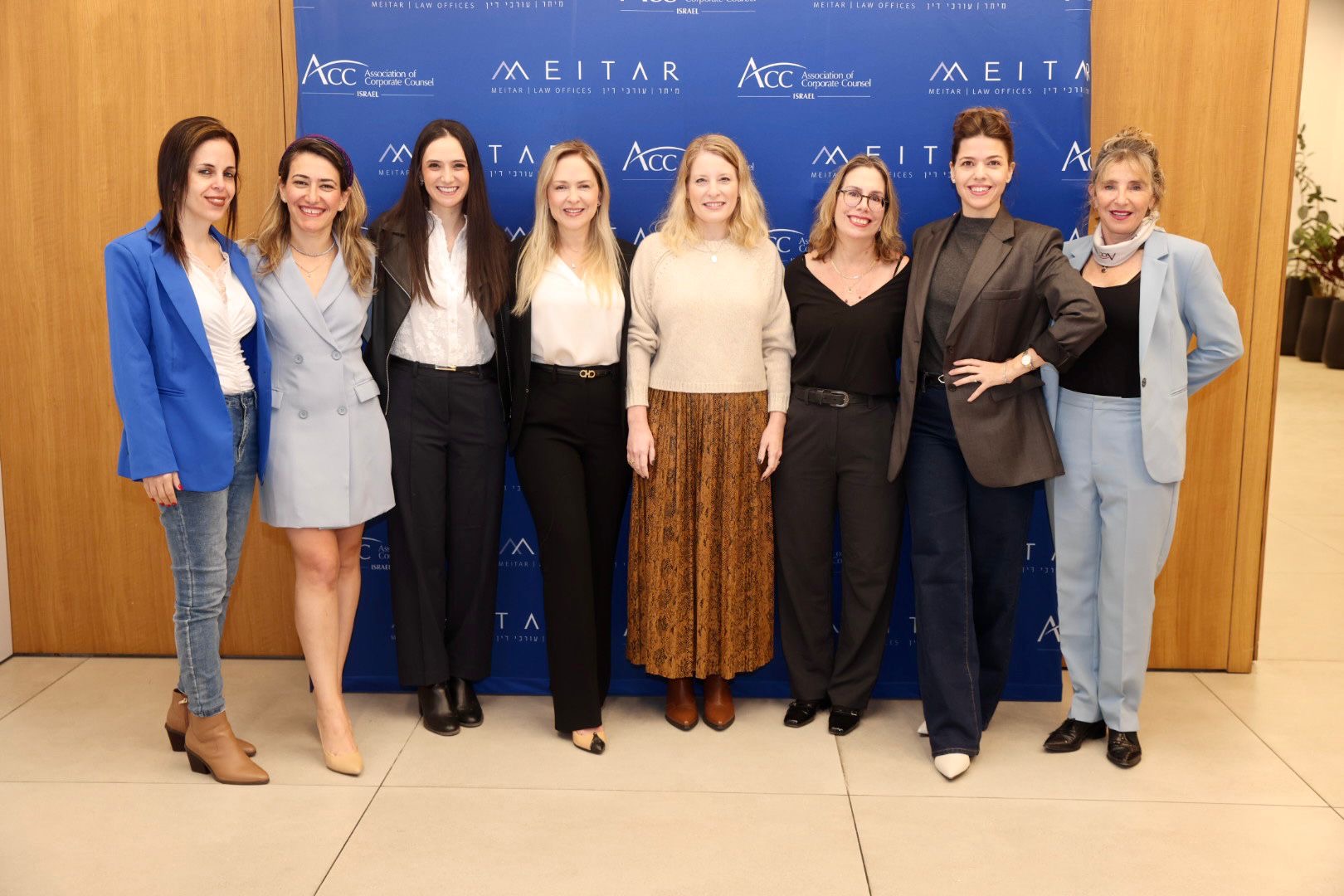
Just days after one of the largest transactions in global tech this year, Google’s US$32 billion acquisition of cybersecurity company Wiz, 200 in-house counsel from across Israel’s technology sector gathered in Tel Aviv for the ACC Annual HighTech Summit, hosted by Meitar Law Offices.
The summit was co-led by Michal Brand Gold, GC at Alice (formerly ActiveFence) and head of the Tech Forum, and Keren Beer, Senior Legal Director at Google, reflecting the forum’s focus on bringing together legal leaders operating at the forefront of technology.
The backdrop mattered
The Wiz deal was not a one-off. In 2025 alone, Israeli tech companies were involved in over US$110 billion in deal activity-M&A, public offerings, and funding rounds- across cybersecurity, AI, and enterprise software. Much of it unfolded under conditions that were, to put it mildly, far from stable.
For the in-house counsels advising these companies, that context is not abstract. It shapes how decisions get made.
Which is where the summit started. Not with regulation. Not with doctrine.
But with a more uncomfortable question: What does the legal role look like when there is no clear playbook?
The theme — Beyond Legal Advice — was less branding and more diagnosis.
Across sessions, one pattern kept emerging: legal is being pulled closer to the core of decision-making, but without a corresponding increase in formal authority.
Across sessions, one pattern kept emerging: legal is being pulled closer to the core of decision-making, but without a corresponding increase in formal authority.
Keynote speaker Yinon Costica, Co-Founder and VP Product at Wiz, put it simply: In fast-scaling companies, the role of in-house counsel is foundational. Trust cannot be layered on after the fact. Security, privacy, and governance only work when they are built into the system early. Otherwise, they become friction.
For in-house counsel, that creates a structural shift. The job is no longer to review decisions once they are formed, but to be present early enough to shape them-often before all the facts are clear.
That, in turn, raises a different kind of risk: making calls under uncertainty, without precedent, and with real business consequences.

AI only sharpens that dynamic
Lotan Levkowitz, Managing Partner at Grove Ventures, framed it bluntly: if tasks that used to take hours now take minutes, then activity is no longer a meaningful measure of value. The question becomes one of decision quality.
It sounds intuitive. It is also hard to operationalize.
What does “quality” mean in legal decision-making?
How do you measure it?
And how do you maintain it when the pace of execution accelerates?
Those questions remained open-intentionally so.
While many of these challenges are global, the environment in which they are playing out adds a distinct layer.
Israeli technology companies tend to operate internationally from an early stage, across multiple regulatory environments and under heightened scrutiny. Legal teams are expected to keep pace-not by slowing the business down, but by enabling it to move responsibly.

The panel discussion brought these tensions into sharper focus. The conversation moved quickly from theory to practice: how decisions are made when timelines are short, information is incomplete, and the stakes are high. One of the more candid threads addressed the traditional law firm billing model and whether it remains viable in an AI-driven environment. As legal work becomes faster and more automated, measuring value by hours or volume feels increasingly misaligned, yet no clear alternative has fully emerged. Participants pointed to a growing gap between efficiency and evaluation: while AI can accelerate execution, it does not simplify the challenge of assessing quality. What does “good” look like when outputs are easier to produce, but judgment remains complex?

That combination leaves little room for theoretical debates.
It also explains why some of the most valuable moments at the summit happened outside the formal sessions. Conversations between peers, comparing approaches, sharing what worked (and what didn’t), and, in some cases, openly acknowledging uncertainty, carried as much weight as the stage itself.
Conversations between peers, comparing approaches, sharing what worked (and what didn’t), and, in some cases, openly acknowledging uncertainty, carried as much weight as the stage itself.
For ACC’s HighTech Israel forum, this is where its value becomes clear. Beyond content, it provides a space for in-house counsel to engage with complexity in real time, learning not from theory, but from each other.
The shift “beyond legal advice” is already underway.
The real question is how prepared legal teams are for what comes next, and how communities like ACC HighTech Israel can help them navigate it.
Disclaimer: The information in any resource in this website should not be construed as legal advice or as a legal opinion on specific facts, and should not be considered representing the views of its authors, its authors’ employers, its sponsors, and/or ACC. These resources are not intended as a definitive statement on the subject addressed. Rather, they are intended to serve as a tool providing practical guidance and references for the busy in-house practitioner and other readers.