Banner artwork by / AI
In a market where discovery happens via search bars and algorithms before handshakes, the most valuable experts aren’t just excellent, they’re easy to find, understand, and sponsor. These and many more where part of the points highlighted about the importance of personal branding in our recent webcast “Personal Branding: Strategies to Position Yourself as an Expert.”
On 26 February 2026, the ACC Small Law Department in collaboration with the ACC International Legal Affairs Network, ACC Financial Services Network, and ACC Law Management Department Network hosted a virtual program, with renowned global executive and leadership coach, Jenny Fernadez as speaker. The webinar underscored an urgent truth: AI is compressing cycles of discovery and reputation‑building.


Why personal branding matters now
Opportunities flow to professionals whose expertise is legible online and off. That means your profile must “pull” opportunities in (searchability, authority signals, proof) rather than merely “push” credentials out. It also means that by investing time to develop a personal brand now, you set yourself up positively for future success. As personal branding is not cosmetic packaging; it is strategic clarity about who you are, what you deliver, and why it matters now (in the Age of AI) communicated consistently where decision‑makers look.
Opportunities flow to professionals whose expertise is legible online and off.
According to Jenny Fernadez, personal branding is the process of creating an identity for yourself as an individual or business (entrepreneur or large enterprise). This involves developing a well-defined and consistent message, and presence offline and online over time that your intended audience understands.
Here are my key takeaways from her session.
Step 1: Run a SWOT analysis on your brand
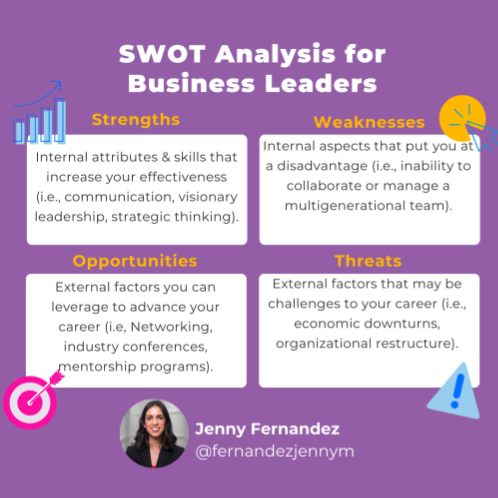
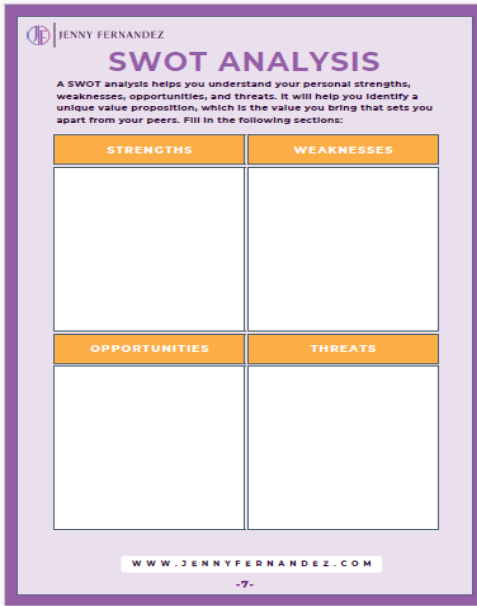
A personal SWOT turns brand‑building from guesswork into a strategic plan. Complete the grid below, then translate insights into 90‑day commitments. Anything that does not reinforce these SWOT pillars becomes optional. This disciplined narrowing prevents diluted messaging and focuses you on who and what matter most.
- Strengths — Where have you delivered non‑obvious, quantified outcomes?
- Weaknesses — What blurs your message?
- Opportunities — Which trends can you credibly own now?
- Threats — What perceptions or shifts could sideline you?
AI Prompt – Conduct a SWOT analysis of my LinkedIn profile and resume. My goal is to be known as an expert in the intersection of [insert your goal here]
In leveraging AI, you can use the prompt above to support your initial proposition and use that feedback to create a brand proposition.
Sample SWOT Analysis culled from Jenny’s website - https://jennyfernandez.com/
Step 2: Clarify the audience who decides your future
Brand clarity is not what you say but about what the audience hears. When presenting a speech, talk, panel session, the first and most important rule is to know your audience. Knowing and understanding your audience prevents your message from getting diluted and it increases your impact.
After running the SWOT analysis, it gives you clarity in profiling the decision‑makers and amplifiers who can change your career trajectory . They become your audience. For example, the CEO, CLO, CFO, CRO, Company Secretary, regulators, and industry peers). You should then map each pillar to their priorities, i.e. what is important to them – risk, growth, speed, credibility. Once done, tailor the language of your message according to the audience. To the CEO, it can be strategy, the CRO – risk and its impact on the business, the CFO – P&L and how it impacts business strategy or bottom-line etc.
Step 3: Validate perception with external feedback
In creating your brand proposition, invite three to five trusted colleagues or mentors to share three words that describe you. Their feedback will give you fifteen data points to analyze and build your personal brand.
PS: Don’t ask family and friends as they may not be entirely honest with you and you need honest feedback for this exercise.
As a general rule of thumb, Jenny emphasized developing thick skin when deciding to undertake the personal branding journey as the likelihood of facing criticism or skepticism is high. She advised that you surround yourself with supportive, ambitious peers to help sustain one’s motivation on the journey.
Step 4: Use AI as an accelerator
AI can compress the time needed to audit, align, and articulate your brand. Use it for first drafts; keep your voice for final edits.
Here is another prompt to support you in building your personal brand.
Brand Audit Prompt: “Act as an executive brand strategist. Review my resume and LinkedIn (pasted below) and: (1) infer my three strongest pillars; (2) identify audiences who would value this most; (3) flag inconsistencies; (4) draft a 150‑word bio and 50‑word tagline aligned to in‑house counsel career paths; (5) propose 10 post ideas mapped to the three pillars.”
Step 5: Turn intention into a 90‑Day branding contract
Great brands are intentional about results. They don’t drift; they have a clear strategic vision on how to achieve organizational goals. As individuals, we should be no different. We should aim to “contract” with ourselves to achieve the next level.
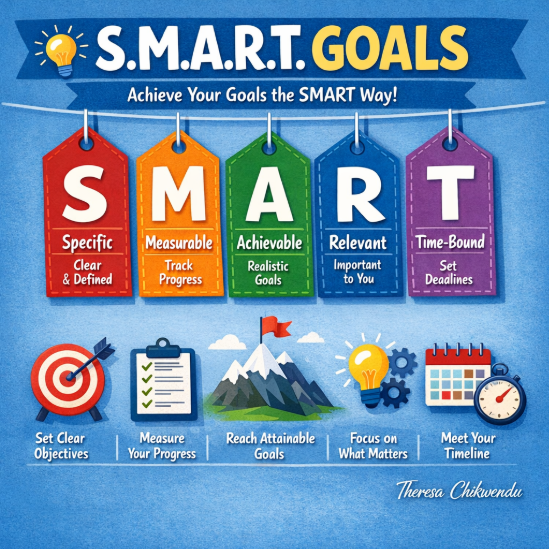
Jenny advocates making a personal contract with clear branding goals and regular reviews every 90 days. This includes setting specific actions like publishing articles, moderating panels, or collaborating with peers. The goal of the personal self-branding contract is to maintain focus, accountability, and momentum in brand-building efforts. By transforming branding from vague intentions to concrete, measurable progress. This 90-day contract formalizes the commitments, deliverables, and performance expectations required to build a strong, credible, and highvisibility executive brand. It transforms intention into measurable action so that progress becomes inevitable, not optional. Think about SMART goals.
Step 6: Make sponsorship your growth multiplier
Mentors advise; sponsors invest political capital. Earn relationship currency by delivering early, sharing credit, and making advocacy low‑friction. When trust is earned, ask explicitly for sponsorship for the next visible opportunity.
You can watch Carla Harris ted talk to learn more about the importance of sponsors and attracting one in your career.
ACC member call to action
1) Run the SWOT AI Prompt today (strengths, weaknesses, opportunities, threats) today.
2) Launch a 90‑day contract and get an accountability partner.
3) Activate sponsorship. Identify one sponsor.
4) Jenny says ask yourself these questions:
- What do I stand for?
- What is my personal story?
- How does my personal brand align with my career goals and aspirations?
- How does it align with the organization?
- Who are my supporters?
Conclusion
Always remember that your reputation is the average of a thousand small consistencies both online and offline. So, say yes to personal branding and accept that speaking engagement. Volunteer at industry events, and conferences. Build a community.
Lastly for staying power ensure that you get an accountability partner and your brand is authentic and backed by real results and accomplishments.
Further Readings
- You can read more about Jenny Fernadez work on personal branding here.
- You can read Theresa Chikwendu’s article on personal branding here.
Disclaimer: The information in any resource in this website should not be construed as legal advice or as a legal opinion on specific facts, and should not be considered representing the views of its authors, its authors’ employers, its sponsors, and/or ACC. These resources are not intended as a definitive statement on the subject addressed. Rather, they are intended to serve as a tool providing practical guidance and references for the busy in-house practitioner and other readers.