
Banner artwork by Deemerwha studio / Shutterstock.com
At first glance, Christopher Y. Chan’s career might look like a series of bold leaps — from a US law firm to a startup in Southeast Asia, from Alibaba to a global leadership role at Jones Lang LaSalle (JLL). But for Chan, the throughline isn’t risk-taking for its own sake. It’s about knowing when to move — and ensuring the right systems are in place to support that move.
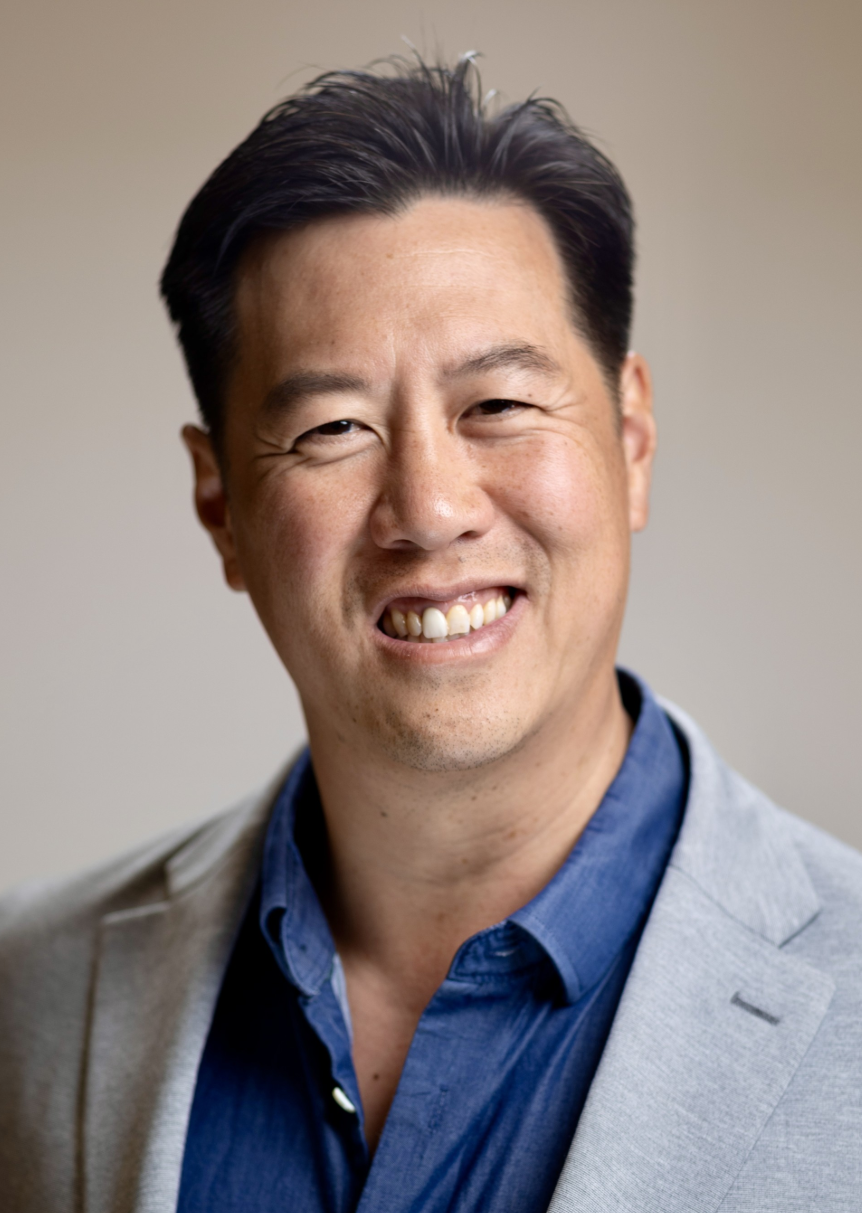
General Counsel
Jones Lang LaSalle Technologies
It’s a mindset shaped as much by his professional journey as by his life outside the office. An avid rock climber, Chan doesn’t see risk as something to avoid, but something to manage with discipline and preparation. “You can move quickly and take bold positions, but you need a safety net. In the legal context, that safety net is strong governance and clear practices,” he shared.
Today, as General Counsel of JLL’s Technology Division, Chan brings that philosophy to a global stage — helping the organization navigate artificial intelligence, data innovation, and digital transformation. In his view, the modern general counsel is no longer just a guardian of risk, but an architect of the frameworks that allow innovation to happen responsibly.
His path to that role has been anything but linear. At 22, he moved to India to help launch an international office — an experience that sparked his interest in law and global business. After building a foundation in intellectual property and clerking at the US Court of Appeals for the Federal Circuit, he made a high-risk pivot: relocating to Singapore without a job. There, he became the first legal hire at RedMart, helping guide its growth and eventual acquisition by Alibaba, and later stepping into senior regional leadership roles across Southeast Asia.
Throughout that journey, Chan leaned heavily on community — particularly ACC’s Singapore chapter, which played a formative role as he established himself overseas. “When I first moved to Singapore, ACC took me under its wing. It helped me build relationships that have lasted throughout my career,” he said.
Now back in the United States with a global remit, Chan is focused on a new frontier: helping legal teams adapt to a world where technology is evolving faster than ever — and where the expectations of legal leadership are evolving just as quickly.
For Chan, that shift comes down to a few core principles:
- Take risks, securely. You can push boundaries and drive innovation, but you have to do it in a way that’s structured and secure.
- Lead as a business partner. First and foremost, a general counsel needs to be a business person.
- Simplify governance. The most effective frameworks are simple, secure, human-centered, and ethical.
- Act with urgency. This isn’t something to wait and see; these are conversations organizations need to be having now.
- Make intentional career choices. Staying where you are is still a decision, and it should be a conscious one.
Taken together, these ideas reflect a broader shift in the profession — one that Chan has not only experienced firsthand, but has helped shape. In an era defined by rapid technological change and global complexity, today’s most effective legal leaders aren’t just managing risk. They’re building the systems that make progress possible.
Q&A with Christopher Y. Chan
ACC:
Your career began with a bold move to India at just 22. How did that experience shape your approach to risk and your career overall?
Chan:
I’ve always had a bit of wanderlust. Early on, I had the opportunity to move to Pune, India, to help set up an international office for my company. This was before smartphones; navigating a new country, culture, and business environment was a real challenge.
That experience opened my eyes to how complex doing business can be across jurisdictions. It’s actually what sparked my interest in law: understanding how systems work, how regulation impacts business, and how you navigate uncertainty.
More broadly, it made me realize how important it is to think globally. The US economy doesn’t operate in a vacuum; what happens internationally matters. That experience really shaped my desire to build a career with an international dimension.
ACC:
Your career includes several major pivots — from law firm to startup to global enterprise. How do you decide when it’s time to make a move?
Chan:
People often assume those decisions are highly planned, but in reality, it’s about creating opportunities and being ready to act when they appear.
One thing I always emphasize is that staying where you are is an active choice. It’s not passive. So I try to be very intentional and ask myself three questions: What do I have? What do I want? And what am I willing to sacrifice to get there?
That framework has guided a lot of my decisions — whether it was leaving a law firm for a clerkship, moving overseas without a clear job lined up, or returning to the U.S. after a decade in Asia.
I also rely heavily on mentors and sponsors when making those decisions. They provide perspective and help you see opportunities you might not fully appreciate on your own.
When I first moved to Singapore, ACC took me under its wing. It helped me build relationships that have lasted throughout my career.
Christopher Y. Chan
ACC:
You took a significant leap moving to Singapore without a job and eventually became the first legal hire at RedMart. What did that experience teach you?
Chan:
It was one of the most formative experiences of my career. It wasn’t easy — I applied to dozens of roles and faced a lot of rejection. I didn’t have the typical background companies were looking for in that market overseas.
What made the difference was persistence and networking. I spent months meeting people, attending events, and getting involved in the local legal community. When I first moved to Singapore, ACC took me under its wing. It helped me build relationships that have lasted throughout my career. It gave me a network and a sense of belonging in a new market.
When the opportunity at RedMart came up, I leaned into it fully. I was transparent about my gaps but also clear about the value I could bring. I came in with a plan and a willingness to take on anything.
That role gave me exposure to everything — commercial work, regulatory issues, M&A, scaling a business, building a legal team. It was a crash course in being an in-house lawyer, and it really set the foundation for everything that came after.
ACC:
You’ve mentioned that your approach to risk is shaped by your experiences outside of work — including rock climbing. How does that translate to your role as a legal leader?
Chan:
In rock climbing, you’re constantly managing risk. You’re moving quickly, making decisions in real time, but you’re also relying on a system — your rope, your gear, your training — to keep you safe.
I think about legal leadership in a similar way. Businesses need to move fast. They need to innovate. But you can only do that effectively if you have the right guardrails in place.
So for me, the role of legal isn’t to stop movement; it’s to create the conditions where the business can move confidently, knowing that the risks are understood and managed.
You can move quickly and take bold positions, but you need a safety net. In the legal context, that safety net is strong governance and clear practices

ACC:
After RedMart, you moved into a leadership role with Alibaba and later joined JLL. What factors influenced those transitions?
Chan:
Each move was driven by a combination of professional, personal, and geopolitical factors.
At Alibaba, I had the opportunity to work at incredible scale — across multiple countries, in a highly competitive environment. It gave me exposure to different leadership styles and ways of doing business.
Later, when I joined JLL, one of the key factors was the opportunity to work with Alan Tse, who is JLL’s Chief Legal Officer and a former member of ACC’s global board of directors. I had known Alan for years through the broader legal community, and I really respected his leadership.
The role also gave me the chance to lead a larger team and work in a new industry, while helping drive digital transformation. It was a different kind of challenge, and that was very appealing.
You can move quickly and take bold positions, but you need a safety net. In the legal context, that safety net is strong governance and clear practices.
ACC:
You’ve said that the modern general counsel needs to be an “architect of responsible innovation.” What does that look like in practice?
Chan:
The first thing is that you need to understand the business deeply. Legal expertise is important, but it’s not enough on its own.
You need to know how your company makes money, how decisions are made, and what drives value. That allows you to focus your efforts on what really matters.
For example, when I joined JLL, I looked at how the legal team was operating and identified areas where we could improve efficiency. One simple change — automating routine agreements like NDAs — significantly increased deal velocity and allowed the team to focus on higher-value work.
That’s what I mean by responsible innovation. It’s not just about adopting new technology — it’s about using it in a way that meaningfully improves how the business operates.
ACC:
You’ve also said that regulation should enable, not hinder, innovation. How do you translate that into practical frameworks, especially around AI?
Chan:
The key is simplicity. You need clear, digestible principles that people can actually apply in their day-to-day work.
For us, that comes down to three core ideas: everything needs to be secure, human-centered, and ethical. Those principles guide how we evaluate tools, how we design processes, and how we interact with the business.
It’s also important to reinforce those principles consistently — through training, communication, and leadership. People aren’t going to read long policy documents, but they will remember simple frameworks that help them make decisions.
ACC:
Building on that, how should legal teams be thinking about AI adoption more broadly?
Chan:
One of the biggest challenges is that not everyone is going to be at the same level of comfort or proficiency with AI. You have to recognize that and plan accordingly.
What we’ve found effective is identifying people who are naturally inclined toward this technology — people who are curious and willing to experiment — and giving them the space to explore. They become champions within the organization and help bring others along.
At the same time, you need strong governance and clear expectations. This is not something organizations can take a wait-and-see approach to. The pace of change is too fast.
I also think it’s important that innovation is driven internally. External partners can help, but ultimately, each organization needs to understand its own workflows, risks, and opportunities. That’s what allows you to build solutions that actually work in practice.
ACC:
Mentorship and community have played a significant role in your career. How have you approached building those relationships?
Chan:
Mentorship doesn’t just happen; it’s something you build over time.
For me, it’s been about showing up consistently, contributing to the community, and building genuine relationships. Organizations like ACC have been incredibly important in that regard.
It’s also important to give back. You can’t expect people to invest in you if you’re not investing in others or in the broader community. Over time, those relationships become incredibly valuable — not just professionally, but personally as well.
ACC:
Finally, what advice would you give to lawyers who want to build an international career?
Chan:
There’s never going to be a perfect time to do it. The longer you wait, the more commitments you’ll have, and the harder it becomes.
If it’s something you really want, you have to make a conscious decision to pursue it. Give yourself a timeline, weigh the trade-offs, and then commit.
It’s not easy. There will be uncertainty, and you may have to make sacrifices. But those experiences can be incredibly rewarding, and they’ll shape how you see the world and your career.
Disclaimer: The information in any resource in this website should not be construed as legal advice or as a legal opinion on specific facts, and should not be considered representing the views of its authors, its authors’ employers, its sponsors, and/or ACC. These resources are not intended as a definitive statement on the subject addressed. Rather, they are intended to serve as a tool providing practical guidance and references for the busy in-house practitioner and other readers.