Banner artwork by / ACC
Looking back on my career, many of the most important lessons I learned did not come from a CLE program, a textbook, or even a formal mentor. They came from hallway conversations, candid advice from seasoned colleagues, and relationships built through organizations like ACC. Those experiences shaped how I approached challenges, developed as a leader, and navigated my career. During this year’s ACC Annual Meeting, I found myself thinking about the next generation of lawyers and wondering whether they will have the same opportunities to learn from those around them if professional development and work become increasingly virtual.
For much of the legal profession, the past several years has shown that meaningful work can happen from virtually anywhere. Technology has expanded access, increased flexibility, and made it easier than ever to connect across organizations and continents. Today’s legal departments are not only spread across oceans and time zones; the people in them often work from home multiple times a week.
May data from Gallup show that 52 percent of US employees work hybrid schedules and 26 percent work fully remotely. Globally, reports indicate that 72 percent of companies offer remote or hybrid options. The same pattern holds in the legal profession: ACC’s 2026 Compensation Survey found that hybrid work is the most common arrangement, cited by 54 percent of respondents. Two remote days per week is the most common schedule, while 24 percent work fully remotely.
We can all acknowledge the benefits and flexibility that come with remote work. ACC staff would likely rank the ability to work from home a few days a week among their most valued benefits. There’s data to back up the benefits to employers, too. The same Gallup data found that “exclusively remote and hybrid employees are more likely to be engaged and thriving than their on-site remote-capable counterparts.” And 87 percent of the legal professionals ACC surveyed reported positive work-life balance on hybrid schedules, rising to 95 percent for those fully remote.
For those newer to the profession, however, the question becomes one of access and opportunity. Can lawyers and legal professionals develop the judgment, relationships, and leadership skills that define successful careers if too much of that growth happens remotely, without regular in-person interaction?
What we miss when we stop gathering
The data tells me that legal departments that lean into flexibility will do well at attracting the next generation of legal professionals. But they will also need to account for the connections that often only happen in-person and keep adapting the technology that helps fill the gap.
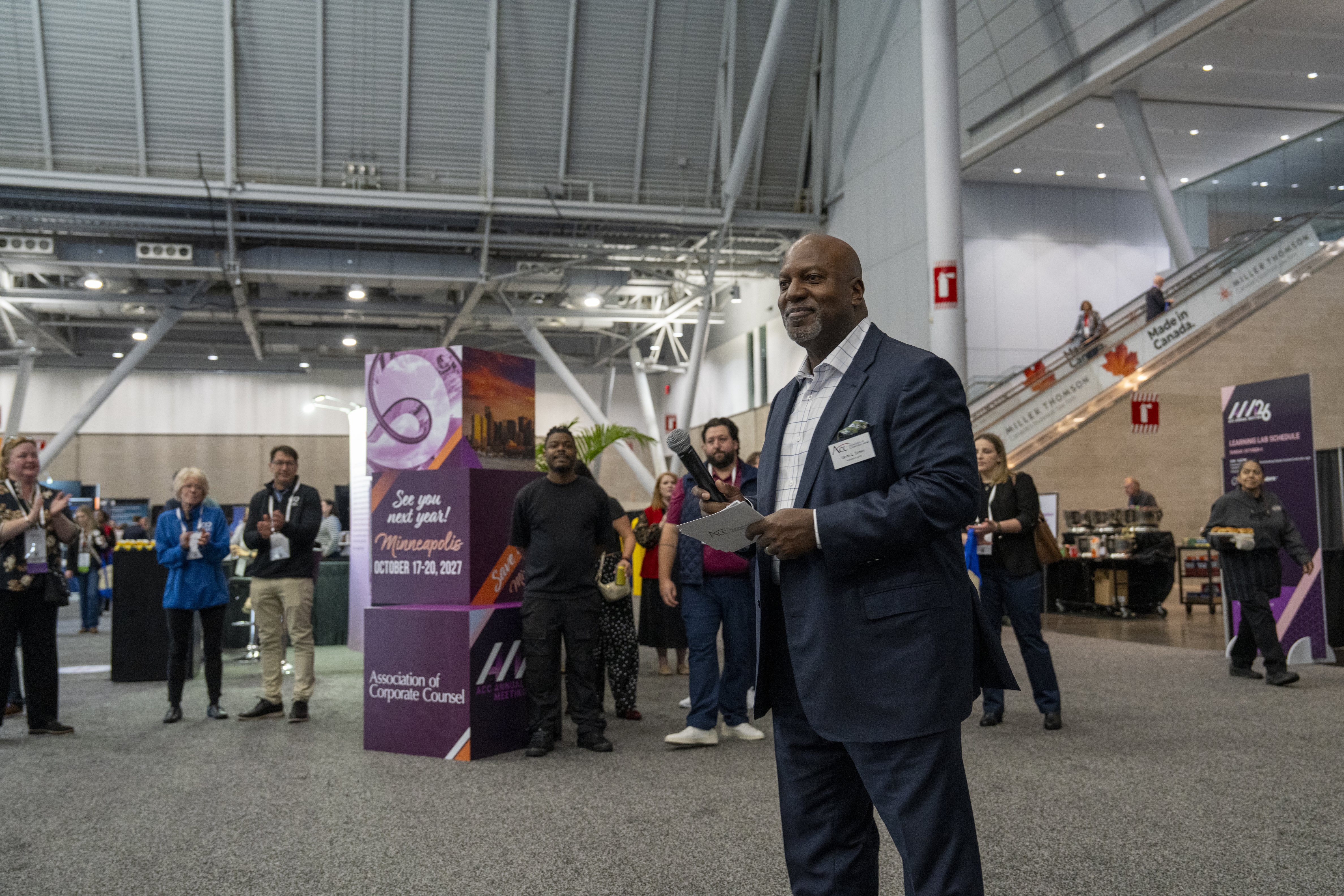
I say this from personal experience. Some of the most valuable lessons in our profession are not learned through a screen, but through conversations, shared experiences, and connections made by simply being in the room. I was reminded of this in Boston earlier this month, surrounded by more than 3,000 legal professionals ready to learn, connect, and grow their networks.
Many sessions at this year’s conference focused on AI and how it’s transforming the way we work, lead, and optimize legal departments. ACC’s most recent AI study found that within just two years, AI use in legal departments rose from 23 percent in 2024 to 85 percent in 2026.
The next generation of lawyers joining our teams have spent much of their time in front of a screen and, increasingly, learning to work with AI as part of their professional toolbox. But building a lasting career takes more than legal and technical skills. It takes a community: a network where ideas and challenges are shared, relationships grow, and mentors are found. That can and does happen virtually, but there’s something uniquely special about an in-person connection.
The value of being in the room
Looking back, I learned more by being there than I ever could have from a distance. In my first month at Pepsi, I rode in a delivery truck at 5 a.m., stocking grocery stores across the Chicagoland area. No briefing memo could have taught me what I learned on that route with those delivery drivers: how the product moved, what the people closest to our customers worried about, and what the real risks to the business were. That on-the-ground exposure made me a better lawyer. It opened my perspective and strengthened my ability to advise and defend the company, and I carried those lessons with me to every role since.
That kind of learning rarely shows up on an agenda. It happens in the hallway after a meeting, over coffee with a colleague, or in the few minutes before a conference session starts, when someone asks, “Can I run something by you?” Those spontaneous conversations build trust, and trust turns a colleague into a collaborator, and sometimes into a wise mentor or a friend.
Attendees of the Annual Meeting regularly tell us that the connections they make with peers are what they value most about the conference, alongside the educational content. The sessions may be why people come, but the people are a big part of why they come back.
The benefits of working from home are clear and plentiful, and our own data shows remote work isn’t holding people back from promotion. But I want the next generation of legal professionals to have experiences like mine: to see how the business runs from the people who make it happen, not just from the legal viewpoint. It’s essential for the business to know you, and for you to know the business.
Those informal moments can lead to meaningful peer relationships and faster professional development. They can even get a little competitive, which can be a very good thing.
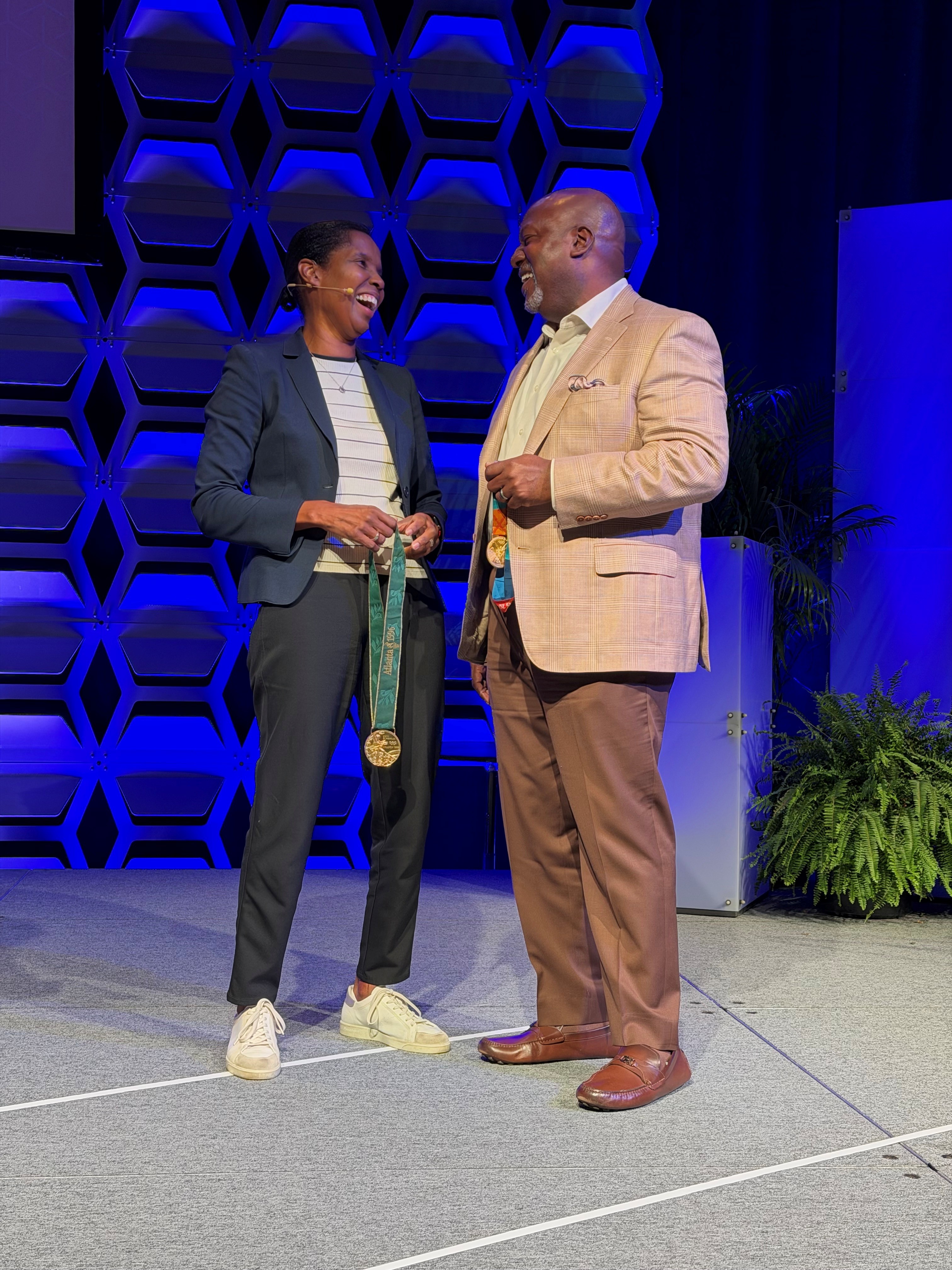
Soccer legend Briana Scurry, an old high school schoolmate of mine, captured this in one of this year’s keynote addresses. She spoke about the coaches and mentors who shaped her, and about choosing the University of Massachusetts specifically because the top goalie in the country was already there. She wanted to be pushed by another All-American. “Pressure creates diamonds,” she said.
The same holds true for young legal professionals. Healthy competition, and building something together as a team, sharpen everyone involved. Much of that can happen on Teams and Zoom, where colleagues in other states and countries can be part of the conversation. But teams that also come together in person at some cadence, whether quarterly at headquarters or once a year at a retreat, tend to come back stronger. Where and when possible, creating that space can only strengthen the dynamic.
Building community – ACC Connects
Being in-house can be a lonely job. Especially for General Counsel. Many in-house counsel work in small departments, some as the only lawyer in the building, and there isn’t a playbook for it. Often the best guidance comes from someone who has already faced the same challenge at a different company.
That’s what ACC gave me. I began my involvement with the ACC Chicago Chapter by attending events and volunteering, joining chapter leadership, and ultimately serving as chapter president. Each step put me in rooms with people who had already navigated the paths I was on, and they were generous with what they had learned.
I’ve said this before: ACC is an ecosystem. It’s not just the lawyers who work in-house who are members of this community. It’s the legal operations professionals, our vendors, sponsors, and stakeholders. That ecosystem has helped me grow my career, and I want the same for ACC members today and for the next generation.
Chapter meetings and events are where much of this community building happens. For those who can’t always be in the room, ACC Mentor Match helps close the gap. Since launching in spring 2025, the program has connected nearly 400 mentors and almost 800 mentees in 35 countries, meeting virtually or in person. This year we added a guided mentoring cohort and a Mentor Match lunch at the Annual Meeting, so pairs who first connected online could meet face to face. Connection matters.
The next generation of lawyers and doing our part
Some traditional ways of learning are disappearing, with AI speeding up that change. Our AI survey found that the tech is already absorbing work traditionally given to early-career attorneys. Yet 52 percent of legal departments haven’t adjusted their approach to professional development, and 54 percent don’t factor AI fluency into hiring or performance reviews.
As a young attorney, I would have drafted an outline that AI can now create in minutes or sat in on a senior colleague’s negotiation to learn judgment and get feedback. Today, as technology handles more of these tasks, and screens handle more of the interaction, we must be deliberate about recreating that exposure.
Mentorship and professional identity are built through proximity and participation. That is where my fellow Gen X and millennial leaders come in. We built our careers in the room and now lead teams that work largely online, which puts us in the best position to bridge the two. We have a responsibility to create these opportunities on purpose. That means bringing junior colleagues into business meetings, not just legal ones, encouraging and sponsoring their first local chapter event or Annual Meeting, and making time for one-on-one conversations.
Showing up still matters
Flexibility has made our profession more accessible and more global, and it is here to stay.
But ours is a profession built on relationships, judgment, and trust — and those grow through meaningful human connection. Technology can make us faster, but showing up is still how we become better lawyers, better leaders, and a stronger community.
My ask is simple: let’s keep creating spaces where legal professionals can learn from one another, build community, and grow together. Bring a junior colleague to your next chapter meeting. Sign up to be a mentor. And I hope to see you, along with the next generation of in-house leaders, at next year’s ACC Annual Meeting.
Disclaimer: The information in any resource in this website should not be construed as legal advice or as a legal opinion on specific facts, and should not be considered representing the views of its authors, its authors’ employers, its sponsors, and/or ACC. These resources are not intended as a definitive statement on the subject addressed. Rather, they are intended to serve as a tool providing practical guidance and references for the busy in-house practitioner and other readers.